I believe performing a task as an effective team can be even harder than doing it alone. There are so many factors and issues at play—like personality types, understanding people’s capabilities, and individual motivation—when working with others. But there’s power to harness through effective teamwork, and everyone should know how to be part of a team.
The Challenge of Leading a High-Performing Tea
Following on from my previous blog on joining a high performing team, let’s move to the next level and talk about the path to leading a high performing team. I recall my boss in the Program Review office at Coast Guard Headquarters telling us one day it was harder to lead a strong team of thoroughbreds like us than to lead a weaker team. He found it more challenging to get ahead of a high-performing team to know how to guide and direct them and help them achieve their full potential as individuals and as a team. Kind of like an editor reviewing a manuscript that’s a mess versus one that’s polished. Sure, it might be hard to improve the one that needs work and make it good enough, but it could be much harder to make the polished one even better and take it to the next level of excellence.
As my career progressed, I learned my boss had been right. When I joined a weaker team, it was easy to make improvements and bring the unit up. But joining a strong team required a lot more thought and deliberation. I learned two requirements for leading a high-performing team:
- Recognize that each member of the team has value to offer; and
- Know when people reach their limit
As a cutterman who spent 12 years at sea with the US Coast Guard, I have a sea story to illustrate each of those points.
Search and Rescue in a Storm—Each Team Member has Value
As I discovered early in my Coast Guard career, high performing teams rely on every person, regardless of their role, to own their part. I took command of the 210-foot CG cutter Reliance, homeported at the Portsmouth Naval Shipyard in Maine in 2002, shortly following the terrorist attacks of 9-11. The ship was crewed by 75 people, just two of whom were women. From myself, the commanding officer, on down to the newest, most junior enlisted person, everyone was assigned a position on where to report and what function to perform in an emergency situation.
It was mid-November, and the ship was on a six-week patrol to provide safety and security in the wake of the terrorist attacks. We were scheduled to be underway over Thanksgiving, but thankfully we obtained approval for a mid-patrol break that allowed the crew a few days to travel home to be with their families over the holiday. Everyone was tired from performing our missions in the rough seas and cold weather, so we needed the break. I remember sitting down with my family, the air filled with the scent of turkey and all the fixings. I was grateful to be home, and at a table that wasn’t rocking back and forth! The first forkful of moist, delicious turkey was on its way to my mouth when, as if on cue, the phone rang. The duty watchstander on the ship notified me, “Ma’am, we’ve been recalled for a search and rescue case, and we’ve been ordered to get underway as soon as possible.”
It makes for a great story in retrospect, but at the time it was deeply disappointing. However, we all joined the Coast Guard to serve a greater purpose. Saving lives was what we did, regardless of holidays or special occasions that went on without us…as did that fateful Thanksgiving day. Back at the ship we got underway into the teeth of a storm that had been brewing, another reason I was glad to be inport for a few days. Our mission necessitated steaming hundreds of miles offshore into the North Atlantic to rescue a small sailboat disabled and adrift with just one person onboard.
Given the urgency of the situation, a life-and-death matter for the operator of the sailboat, we proceeded out to sea at our best possible speed. With the seas building and hitting us on the starboard quarter, our stern lifted, and the ship rolled, surging down the waves like an out-of-control roller coaster.
We had been underway for only a few hours when suddenly…the power went out, the engines stopped, and we started rolling wildly in the trough of the waves. We immediately sounded the General Emergency alarm, and the crew rushed to man their stations. When the report came in from the engine room, the story unfolded, featuring a huge toolbox that had been bolted to the deck. The force of a heavy roll broke the toolbox loose and hurled it across the engineroom. During its unintended flight, the wayward toolbox struck a small value on one of the main engines, causing fuel to gush out onto the hot deck like water from a showerhead. That caused great alarm, as the next likely event was an engine room fire, which is not something you want at sea in a storm.
Fortunately, a junior watchstander, who hadn’t been aboard the ship for long, flung himself to the engine and shut it down before combustion could occur. That junior person saved the day, proving that each member of the crew, no matter how junior or inexperienced, adds unique value to the team.
Aftermath of the Terrorist Attacks of 9/11—Know when People Reach Their Limit
When I was installed as Captain of Reliance, I was charged to assume full responsibility for the ship and its 75-person crew. There’s an old saying, “when the captain of a ship looks over her shoulder for advice, there’s no one there except God.” It can be lonely at times to bear the full responsibility of leading a team. But that’s what ownership is all about. Ownership requires responsibility for not only yourself, but for your team. And I was proud to have been selected to lead such a proficient, capable crew.
Shortly after I reported aboard following 9-11, Reliance was ordered to patrol off the entrance to NYC to provide security for the port. We were charged with boarding incoming merchant ships of interest—vessels that were suspicious because they originated from certain ports, or they were carrying certain cargo. It was a new mission for the ship and crew.
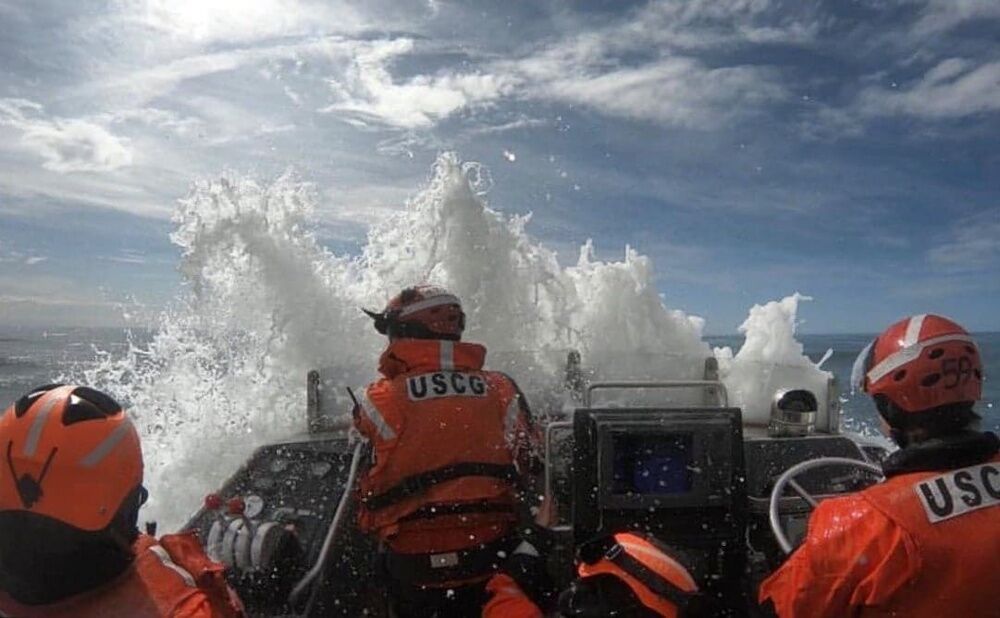
It was wintertime. The North Atlantic was cold and windy, and the seas were rough. We were conducting several boardings per day, each of which required us to lower our small boat and send a team over to the merchant vessel. Sometimes the teams would come back covered in ice from the sea spray that hit them and froze on contact.
After a couple of weeks, I could sense the crew was becoming exhausted, yet everyone was intently focused on the mission. The memory of the terrorist attacks was fresh in all our minds and people were still running on adrenaline, eager to ensure we did all we could to keep America safe and secure. No one knew when or where the next attack might happen. Those were unprecedented times, and there wasn’t much guidance coming down from our operational commander on what should be the tempo of operations. We were making it up as we went along.
One night we got hit by a nor’easter storm, with gale-force winds and snow. We were patrolling close to shore. Suddenly, one of our two engines tripped offline (again!) The engineers couldn’t get it started. The wind was howling and pushing our ship toward shore. The one engine still running allowed us to maintain position, but we were unable to increase our distance from the shoreline due to headwinds. Had we lost the second engine, we risked being wrecked on the lee shore. For me, it was a sleepless night because I owned this problem and felt helpless to solve it.
By morning, the weather had subsided and I took a walk about the decks of the ship to inspect for damage from the storm. The Chief Engineer accompanied me. As we passed down the starboard side of the ship, I noticed a fire hose station mount was empty. I pointed it out to the Chief Engineer and knew he was thinking the very thing that was at the top of my mind: Was it possible that our firehose broke loose, washed overboard, and fouled our propeller?
We filed a request to proceed into port to have divers check our propeller. That was no easy task, and it took us off mission for a couple of days. But sure enough, the divers found our fire hose tightly wound around our starboard propeller. What a self-inflicted wound! That fire station should never have broken open—it should have been checked by a watchstander and secured if it was found to be loose. I realized we’d become so focused on the intense mission that we’d sacrificed our readiness in some regards. I had failed to recognize the crew was becoming stretched beyond their limits.
The next day I called the crew together and told them, “From now on, we’re going to balance the three things that matter most to this mission: Operations, Training & Maintenance, and Crew Rest.” I used the analogy of the three-legged stool to help the crew understand that despite the urgency of keeping the port of New York City safe, we had to be ready—as a ship and as a team—to get the mission done. The crew needed to hear me say that—to give them an order to change the operations tempo. To give them permission to refocus. That’s what leaders of high performing teams do: they step back and look at the bigger picture to prioritize the work and to notice when the team is losing focus or becoming exhausted.
Look in the mirror: What challenges do you face leading a high performing team, and how can you overcome those to help the team achieve its full potential?
Please join me again next time for more on Leading with Character.
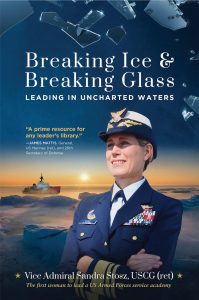
If you enjoyed this post, please visit my website where you can buy my book, Breaking Ice & Breaking Glass: Leading in Uncharted Waters, and sign up for my mailing list: https://sandrastosz.com/book/breaking-ice-and-breaking-glass/